

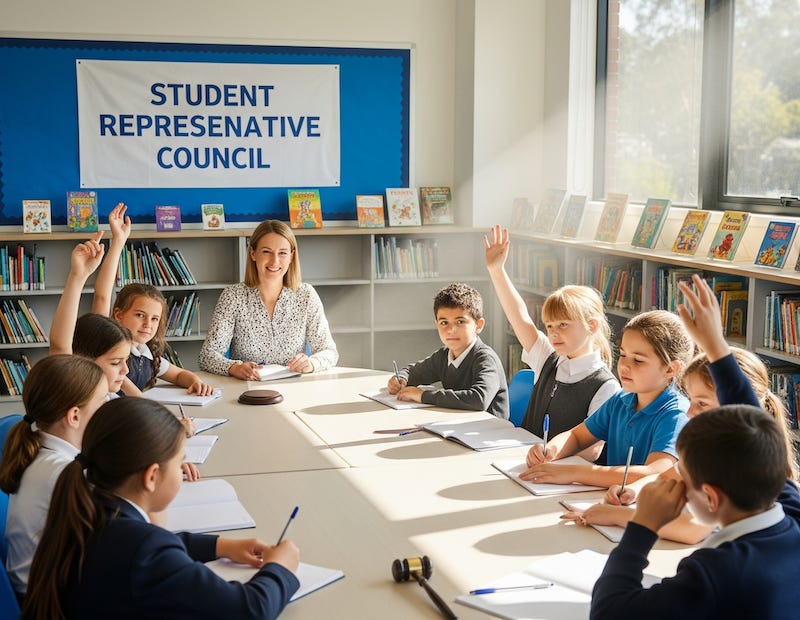
A strong Student Representative Council (SRC) isn't just a token group of kids with badges; it's the heartbeat of your school, a genuine voice for your students, and a fantastic training ground for young leaders.
I've been lucky enough to see some truly brilliant SRCs in action across Australia that really 'get' student leadership.
Teacher aren’t just ticking boxes; they're empowering their kids in meaningful ways.
There are some common threads, some key lessons to learn from these leading schools.
Here are ten things the primary schools with thriving SRCs do brilliantly.
1. They Don't Just Elect, They Select and TRAIN.
Elections are essential because they give kids a voice.
But the leading schools go beyond just putting a ballot box out.
They often have a process where students nominate themselves or are nominated, and then they might even have to share why they want to be on the SRC and what they hope to achieve.
More importantly, they invest time in training their SRC members.
Think about it: we train our sports teams, our musicians, so why not our young leaders?
They teach them about meeting procedures, how to present ideas, how to listen actively, and how to respectfully disagree.
This sets them up for success from the get-go.
2. They Give the SRC Real and Meaningful Projects.
The best SRCs aren't just talking heads.
They're actively involved in making the school a better place.
I've seen schools where the SRC has been instrumental in designing new playground equipment, organising fundraising events for causes they care about, developing school rules around things like technology use, and even providing feedback on curriculum changes.
The key is that the projects are real, the kids see the impact of their efforts, and they know their opinions are valued.
3. They Ensure Diverse Representation.
A truly effective SRC reflects the diversity of the student body.
The leading schools make a conscious effort to ensure that students from different year levels, different backgrounds, and with different interests are represented.
This involves actively encouraging nominations from all parts of the school community and possibly assigning specific roles to make sure diverse voices are heard.
Diversity adds depth and relevance to your SRC.
4. They Provide Regular and Dedicated Meeting Times.
Schools with strong SRC programs schedule regular, dedicated meeting times during school hours.
This shows students (and the staff) that the SRC is a priority.
It also provides students with a reliable platform to discuss issues and collaborate on their projects without it feeling like an additional burden outside of class hours.
5. They Have a Dedicated Teacher Mentor Who Empowers, Not Dictates.
The role of the teacher mentor is crucial.
In the leading schools, this isn't just about a teacher taking minutes.
It's about a teacher who guides, facilitates, and empowers the students.
They assist the students in structuring their meetings, brainstorming ideas, and managing challenges, but they don't take control or dictate the agenda.
The mentor's role is to build the students' capacity for leadership.
6. They Teach Effective Communication Skills.
Being on the SRC is fantastic for developing communication skills.
The schools that lead the way actively teach their SRC members how to communicate effectively – how to articulate their ideas clearly, how to present information to the student body and staff, and how to provide constructive feedback.
This might involve workshops, role-playing activities, or simply providing ongoing coaching during meetings.
7. They Create Clear Channels for Feedback and Action.
An effective SRC is a two-way process.
Students should know how to raise issues with their representatives, and the SRC must have clear channels to communicate student views to school leadership and see action taken.
This could include suggestion boxes, regular feedback sessions with class groups, or presenting reports to the principal or school council.
When students see that their feedback brings real changes, it reinforces the importance of the SRC.
8. They Celebrate the Achievements of the SRC.
Just like any other student achievement, the work of the SRC deserves to be celebrated.
Leading schools find ways to acknowledge the contributions of their SRC members, whether it's through school newsletters, assemblies, or special recognition events.
This not only motivates the current SRC members but also encourages other students to get involved in the future.
9. They Link the SRC to the Broader School Improvement Goals.
The most effective SRCs aren't operating in isolation.
Their work is linked to the broader goals of the school.
For example, if your school is focusing on improving student well-being, the SRC might be tasked with developing initiatives to promote kindness and inclusion.
This alignment ensures that the SRC's efforts are relevant and contribute to the overall success of the school.
10. They Regularly Review and Adapt Their SRC Model.
The needs of your students and your school evolve, and so should your SRC.
The leading schools regularly review their SRC model, seeking feedback from students, staff, and even past SRC members.
They're not afraid to try new things and adapt their structure and processes to ensure that the SRC remains a vibrant and compelling voice for students.
Finally…..
These ten lessons from Australian primary schools represent best practice in the use of Student Representative Councils.
So, how is your school travelling? What do you need to work on?
It’s not about achieving a perfect SRC overnight.
It's about taking the necessary steps to genuinely empower students to lead and make a difference in their school community.
And that is something pretty special.
If you know a teacher who would benefit from or be interested in learning about Best Practice SRC programs, then sharing is simple.
Ready to Transform Student Leadership in Your School?
Build a student leadership system that actually works.
Effective leadership development needs three core components:
A clear, structured framework for building foundational skills
Active mentorship and modelling to accelerate growth
Engaging, inclusive activities that resonate with every student
The Young Leaders Program delivers on all of these—it’s a highly effective, time-saving, and affordable solution designed to empower your students. We offer a variety of packages to fit your school’s budget, ensuring you can find the perfect fit.
Empower your students to lead with confidence. Explore the Young Leaders Program packages on our website today.
