Recently, I conducted a rare half-day workshop for a primary school's student leaders to build their confidence and public speaking skills.
As a former primary teacher, I drew on my knowledge of kids, as well as the experience of giving 1,000s of presentations over 40 years as a professional speaker.
They were real-life tips that they wouldn’t get from any of your usual speaking courses or leadership programs.
But I’m passionate about getting kids on their feet and speaking.
It’s something that most Australians don’t like doing.
They avoid it like the plague.
It’s a pity, because the ability to speak on your feet is so empowering—for the speaker and the audience.
Here’s a run-down of the ideas I gave these student leaders and prospective speakers, so that you can pass them on to students in your school.
You may even find them helpful yourself!!!
1. Squeeze your butt cheeks together and breathe
We all get nervous before we speak.
It’s part of the gig.
But how you handle those nerves is the key to your success.
My favourite trick is to squeeze my butt cheeks together while taking three or four deep breaths. I make sure my breath goes right to my bottom.
Squeezing your bottom helps you breathe deeply, which calms your nerves.
(An aside: Most kids often employ shallow breathing - their shoulders go up and down - which only makes their nerves worse)
Making it work: Four or five deep breaths just before they speak oxygenates their brains and calms their nerves.
2. Expand, don’t shrink
Speaking in front of others takes physical and emotional energy.
It requires you to bring a bigger version of yourself to the podium or stage.
The best speakers, young or old, expand rather than shrink when they are in front of an audience.
I’m not talking about puffing out a chest or being arrogant.
But you need to stand tall, keep your head up and feel confident.
Yes, for the short time you're speaking, it’s all about you, so grow bigger, not smaller.
Making it work: Create language around the term, expanding - “stand tall”, “show up”, “puff that chest out”, “bring your best self”………..
3. Stand in Your Speaking Space Before you Speak
Speaking is physical.
It’s about owning your space and feeling comfortable in the speaking space.
Just as footballers, basketballers and netballers warm up on the court before they play, smart speakers warm up in their speaking space before they speak.
That means standing behind the lectern or on the stage before they speak. They should imagine an audience in front of them.
They can even deliver a few lines.
This will help them feel comfortable in their speaking space and provide a valuable mental run-through.
Making it work: Allow each student to familiarise themselves with their speaking space well before delivering their presentation.
4. Practise Standing Still with Feet Shoulder-length Apart
You can tell a confident speaker by the way they stand.
Kids (and adults) who lack confidence may jiggle about, stand on one foot, or lean on something.
Not only is this distracting, but it sends a negative message to the listeners.
One of the hardest, yet most important things to do as a speaker is to stand still and stand confidently when you speak.
The first thing I work on with a speaker is their stance.
“Stand still with your feet shoulder-length apart , head up and your hands by your side. Hold a pen or something similar in one hand as this will stop you from fiddling about. When you feel comfortable, start speaking.”
I insist that kids practise this in front of a mirror at home. They should do it often.
A strong stance provides the foundation for their speaking capacity.
Making it work: You could do worse than give them Presentation Stance homework.
5. Use the Power of Three
Speech-planning can be time-consuming, especially when you don’t know how.
Speaking professionals all have their own methods.
But most are a variation of the Rule of Three.
That is, divide your speech into three parts. Divide each part into three. Deliver descriptions, reasons and inspirations in threes.
“She is smart, hard-working and honest as the day is long.”
“Here are three reasons you should vote for me…”
“This one idea will change everything. It’s straightforward, easy to put into practice, and you’ll see the benefits in no time.”
There’s a rhythm to threes.
Three is easy to remember, easy to deliver, and easy to recall later.
Three has power.
That’s why it repeatedly appears in literature, marketing, and presentations.(An aside:
(Last week I delivered a eulogy for a close relative at short notice. I used this structure and it worked a treat.)
Making it work: Start with presentation design. Make sure a presentation has three parts. Then break each part into three key points or areas to cover.
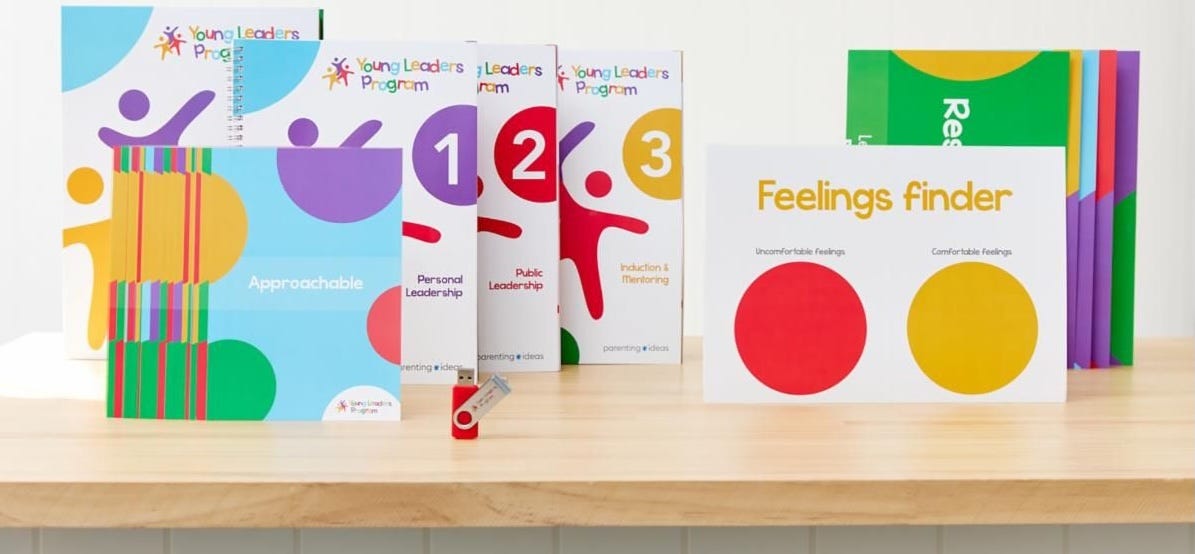
NOTE: This is the design structure covered in the Young Leaders Program - it’s the Easy Talk Planner.
6. Don’t Always Make Eye Contact with your Listeners
Making constant eye contact with your audience is one of the biggest speaking fallacies.
Yes, you need to make eye contact to establish rapport, send a warm message or assess if your message is landing (a higher-level skill), but as a speaker, you don’t need to always look at your audience.
There are three occasions when you shouldn’t look at your audience:
i.) If you are using PowerPoint or other images, then look at the slide or picture that you are talking about, that is, if you want your audience to look at it. Your audience’s eyes go where the speaker’s go.
ii) If you are critical of the audience or delivering bad news, don’t look at them while you provide that part of the message. If you do, they will associate bad news with the speaker.
iii) There are times when you need to “break the message”. That is. you’ve talked about something light, then you are about to discuss a serious matter. Look away and pause. This will break the message, ensuring there is no mixed messaging.
(Teachers should use this technique as part of their classroom management system. That is, "teaching the class- look away - discipline the class - look away - resume teaching the class.
Making it work: Help students develop the habit of breaking eye contact with the audience to look at a slide, picture or item they are speaking about. After an appropriate amount of time, they should resume facing the audience.
7. Rehearse, Rehearse, Rehearse.
Once students have designed a presentation, they need to rehearse it at least three times.
No, they shouldn’t practise reading it.
They should practise speaking it. That is, saying what they want to say.
Each time it will be different. But that’s okay. The main points are sinking in.
But each time, they will know the main points even more.
Each time they’ll embed the critical words, points and reasons into their speech.
The more they know it, the more they can speak it.
Making it happen: Give students sufficient time to design their presentation and even more time to rehearse it at home and at school. One well-rehearsed, well-delivered presentation can have a massive impact on a student, even if it falls a little short of what they expected. And yes, they invariably do fall short in the mind of the speaker, but rarely in the mind of the listeners.
Finally..
Speaking is central to effective leadership.
Yes, leaders take all forms—from studious to sporty; from introvert to extrovert; from thought-provoker to action-oriented—but regardless of personality, type, or aptitude, all leaders benefit from being able to communicate a message to others in a public forum.
So, by encouraging students to speak on their feet, rather than read a speech, you are giving them one of the most potent skills that they can possess.
Each time a student leader gets on their feet to speak at assembly — whether to thank a guest for visiting the school or to give an SRC report — expect them to speak rather than read from a prepared speech.
They may “fluff their lines” and feel awkward, but it’s all part of standing up and being a leader.
Build the Speaking Confidence Students Need to Lead from the Front
At last, an in-school student leadership program that delivers
Effective leadership development needs three core components:
A clear, structured framework for building foundational skills. Speaking confidently is a critical feature of strong leadership, and we develop this by focusing on Presentation Skills—one of the five foundations of leadership in the Young Leaders Program.
Active mentorship and modelling to accelerate growth
Engaging, inclusive activities that resonate with every student
The Young Leaders Program delivers on all of these—it’s a highly effective, time-saving, and affordable solution that empowers your students to lead with a confident voice.
We offer a variety of packages to fit your school’s budget, ensuring you can find the perfect fit.
Explore the Young Leaders Program packages on our website today.