Systems beat strategy as an educational tool of excellence, every time.
Great teachers put systems in place to ensure that their teaching is effective and consistent for every student.
This applies to everything that’s taught, including student leadership.
Leadership researcher David Day, in his latest book Developing Leaders and Leadership: Principles, Practices, and Processes, highlights the importance of systems thinking to develop leadership excellence in the workplace and in the classroom.
So what does a Student Leadership Development System like?
These five practices, which use primary principles for systems development, form the backbone of sustained student leadership growth in schools:
1. Use a Leadership Framework
A meta-analysis of student leadership development shows that schools that use a leadership framework to guide student growth establish sustained skill and character development in students.
Conversely, schools that rely on the “tips and tricks” approach to leadership development invariably experience the “boom or bust” phenomenon, where you get a strong cohort of leaders one year, followed by a very thin cohort!
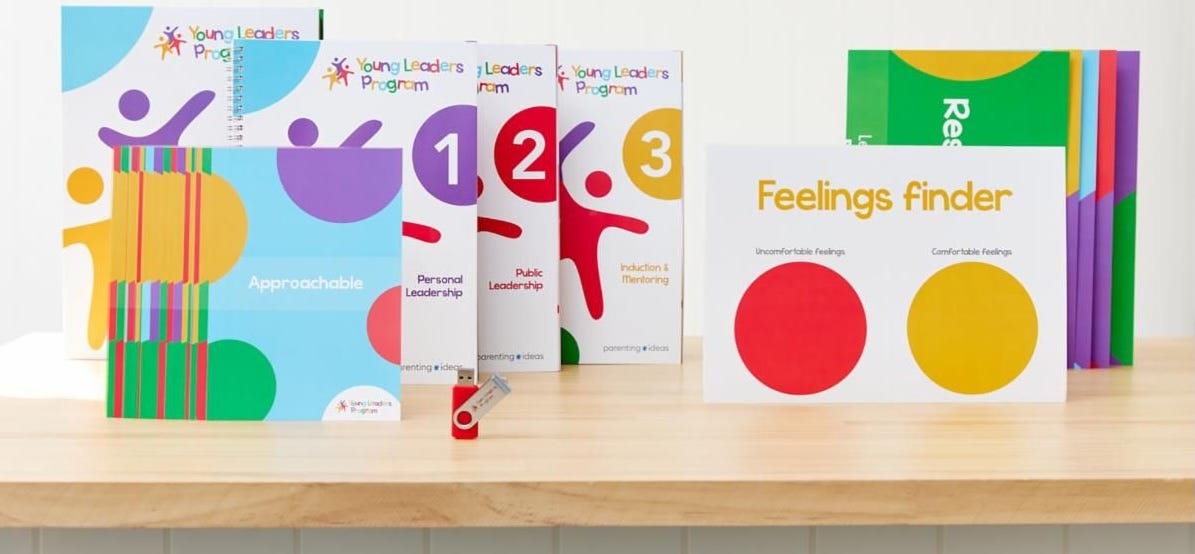
The use of a framework enables consistency in teaching and results. The Young Leaders Program framework, which focuses on Responsibility, Presentation Skills, Organisation, Teamwork, and Emotional Intelligence, helps teachers develop students’ influence, communication, empathetic capacities, and critical character skills for effective leadership.
Frameworks like the Young Leaders Framework do not restrict teachers from using an activity-based approach to teaching leadership. Rather, they provide an organising theme for their leadership games and activities.
2. Explicitly Teach Leadership To Students
Basic learning theory suggests that anything worth learning needs to be taught, not caught.
Evidence shows that many students are unsure about the role of a leader. Many can’t even define a leader past the notion of ‘being the boss.”
Like any worthwhile learning, leadership needs a place in the school curriculum. It doesn’t have to be time-consuming, but some space should be devoted to teaching students what a leader does.
Whether through a unit of work (our preference) or continued reference to leadership, explicit teaching at a senior level is central to an effective leadership development system.
3. Turn Routine Work into Leadership Practice
At the primary school I attended, when a teacher left the room, they’d choose a monitor (usually a responsible type, and often a girl) to write the names on the board of students who spoke while they were away from the room.
The appointed monitor would stand with an imperious look on their face, scanning the room for any miscreant who dared talk to the student next to them at the shared desk—leadership at its finest NOT.
The twenty-first-century classroom offers many opportunities to provide leadership practice for students.
These include leading technology-based projects, organising class events, and participating in community service projects. It’s a matter of recognising and sharing them around rather than always giving responsibility to the responsible kids. Routine opportunities include:
Classroom jobs: Rotate jobs (material manager, tech assistant, and the like) each week or month so all students learn about accountability.
Group projects: Students take turns being project leaders, learning to organise tasks and work as a team.
Morning announcements: Assign a student to lead the morning announcements each day. This is a great way to develop speaking and leadership skills.
Group projects: Students take turns being project leaders, learning to organise tasks and work as a team.
Reading aloud: Let students take turns reading stories or passages to the class to build confidence and speaking skills.
Vary the situations to cater for different student strengths and capabilities.
4. Allow The Leadership Cream To Rise
While leadership is something that each student should experience, not everyone is willing (and able) to take on a formal leadership position confidently in senior primary school.
For many students, it’s not their time for formal leadership.
Let those students who are confident and able to take on leadership roles, including ambassadorial, organisational, representational, team building and the like.
The best way to acknowledge leadership excellence is to allow it to flourish through Recognised Leadership Positions.
5. Give Real Support To Leaders Who Wear a Badge.
Leadership can sit heavily on the shoulders of some students.
Wearing a badge (figuratively or metaphorically) can be challenging. Approaching new experiences, speaking in public, managing less cooperative fellow students, and knowing the limits of a role are well-documented challenges for primary school student leaders.
An effective leadership development system includes mechanisms to support ongoing leadership development, such as:
An induction program that adequately prepares students for their roles.
Regular reviews to discuss their concerns, review and reset goals and evaluate program progress.
Mentoring that fast-tracks development and fosters leadership growth.
Finally………
The best way to ensure student leadership excellence in your school is to put in place an effective system of student leadership development.
Evidence suggests a leadership development system includes:
1. Using a leadership development framework.
2. Explicitly teaching leadership to senior students.
3. Giving students a variety of in-built leadership practices.
4. Providing a variety of formal leadership positions.
5. Supporting students who take up formal leadership positions.
Questions to Ponder
Which of these five parts of the Student Leadership Development System is in place? And which parts still need to be established?
Do you know another teacher or school leader who would benefit from reading this newsletter? If so, it’s easy to share.
Ready to Build Your Student Leadership Development System?
For truly effective student leadership, a robust system needs three key elements:
A clear, buildable leadership framework for foundational learning.
Active modelling and mentorship to accelerate student growth.
Engaging and inclusive activities that resonate with all participants.
The Young Leaders Program delivers on all fronts. It's an affordable, time-saving, and highly effective solution designed to empower your students. With a variety of packages available, there's a perfect fit for every school's budget.
Empower your students to lead with confidence. Explore the Young Leaders Program packages on our website today.