

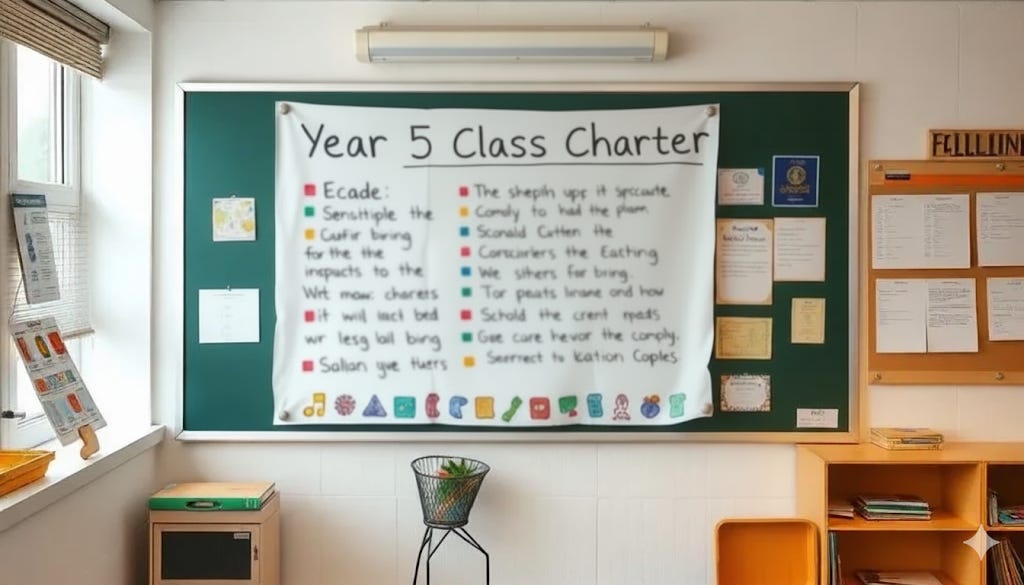
This author first became aware of a classroom emotional intelligence charter (for primary schools) during a professional development program at the Yale Centre for Emotional Intelligence in the US.
I followed up this professional learning with some visits to several New York and New Haven schools to see the emotional intelligence charter in action. It was soon evident that I was something special, and I knew that it would be an invaluable addition to the Australian primary school classroom.
On my return to Australia, I redesigned the Young Leaders Program, adding emotional intelligence as the fifth student leadership building block. The Emotional Intelligence Classroom Charter is a feature of this new building block.
Why an Emotional Intelligence Charter is a Smart Idea
It’s well-accepted that a classroom charter is a foundational tool for setting expectations and building a positive learning environment.
However, an emotional intelligence (EI) charter takes this a step further by focusing on the core skills of self-awareness, self-management, social awareness, and relationship management.
It's not just about setting rules; it's about fostering a shared commitment to understanding and managing emotions, both individually and collectively.
Creating an EI charter is a strategic move for several reasons.
It helps students understand that feelings are a regular part of life and that they have control over their reactions.
It also shifts the classroom dynamic from a system of punishments and rewards to a culture of empathy and mutual respect.
First, it provides a common language for emotions.
When a child is upset, they might say, "I'm mad!" An EI charter gives them the vocabulary to articulate their feelings more precisely, like "I feel frustrated" or "I feel sad because my feelings are hurt."
This clarity helps both the student and the teacher address the root cause of the behaviour.
Second, it fosters self-regulation.
The charter isn't just about identifying feelings; it's about what to do with them.
By co-creating the charter, students contribute ideas for managing difficult emotions, such as taking a deep breath, counting to ten, or using a "calm-down corner."
This empowers them to take control of their emotional state and respond thoughtfully rather than react impulsively.
Third, an EI charter explicitly teaches empathy and social skills.
It encourages students to consider how their actions impact others. By including statements like "We will listen to our friends even when we disagree," the charter models and reinforces the importance of perspective-taking and respectful communication.
These skills are fundamental to successful collaboration and conflict resolution.
Finally, a well-implemented EI charter reduces classroom disruptions.
When students have the tools to manage their emotions and the expectation of mutual respect is clear, there are fewer outbursts and conflicts.
This creates a calmer, more focused learning environment where both teachers and students can thrive.
It transforms the classroom from a place where rules are imposed to a community where everyone has a stake in making it a safe and productive space.
How to Create Your Classroom's Emotional Intelligence Charter

The key to a successful charter is student ownership. The process should be collaborative and engaging, not a top-down list of rules from the teacher.
Here’s a step-by-step guide to get started:
Step 1: Introduce the Concept of Emotional Intelligence
Begin by having a simple discussion about emotions. You can use pictures of different facial expressions or read a book about feelings. Ask students, "What are feelings? Why are they important?" and "How do we know how others are feeling?"
Explain that emotional intelligence is about understanding our own feelings and the feelings of others so we can be good friends and good learners.
Step 2: Brainstorm the "We Want to Feel..." Statements
Start with the desired emotional state. Ask the class how they want to feel in their classroom. Then, have them share what they would see and hear in that classroom. You can guide them with questions like:
"What makes you feel happy and safe at school?"
"What does it sound like when everyone is being a good friend?"
"What do you want to feel when you come to school every day?"
Write all their ideas on a large chart paper. You’ll get responses like "I want to feel happy," "I want to feel respected," or "I want to feel like I can make mistakes."
Step 3: Brainstorm the "How We Get There" Actions
Next, translate those feelings into specific, actionable behaviours.
For each feeling, ask, "How do we make that happen?" For example, if a student says they want to feel respected, ask, "What does respecting someone look like? What does it sound like?" This is where the charter moves from an idea to a practical guide.
You'll get ideas like:
"We use kind words."
"We listen when a friend is talking."
"We say 'please' and 'thank you'."
"We share with our friends."
Again, write down all the ideas on the chart. Keep the language simple and positive. Instead of "No name-calling," write "We use respectful names for our friends."
Step 4: Synthesise, Simplify, and Design
Once you have an extensive list of ideas, work with the students to group similar thoughts and simplify them into 5-7 core statements.
For example, "using kind words," "no name-calling," and "saying nice things" can be combined into one powerful statement like "We use kind and respectful words."
Have the students vote on their favourite statements or help you refine the wording. This final step gives them a true sense of ownership over the document.
You can even have them draw pictures to illustrate each point, making the charter visually appealing and easy for young readers to remember.
Step 5: Sign the Charter and Put it into Practice
This is the most critical step.
Have every single person in the classroom, including the teacher, sign the charter. This is a formal commitment that everyone is on board. Hang the charter in a prominent place in the classroom at eye level for the students.
From now on, the charter becomes a living document.
When a conflict arises, instead of saying, "That's against the rules," you can ask, "How can we use our charter to solve this problem?"
When a student demonstrates great kindness, you can praise them by saying, "You are living our charter so well today."
This makes the charter a constant point of reference, reinforcing its importance in daily life.
Finally
An emotional intelligence charter is a powerful investment in your students' social and emotional development.
It moves beyond traditional classroom rules by focusing on the "why" behind behaviour.
By involving students in the creation of this charter, you empower them to build a community founded on empathy, respect, and personal responsibility.
It’s a tool that not only makes the classroom a better place to learn but also equips children with the fundamental skills they need to navigate the world with confidence and compassion.
Know someone in your school or beyond who’d benefit from learning about the Emotional Intelligence Charter? It’s easy to share.
Unleash the Inner Leader In Your Students
Do you want to develop genuine leadership skills in your students without adding to your already overwhelming workload?
The Young Leaders Program is a comprehensive, ready-to-use solution designed to do exactly that. We believe true leadership isn't just about giving orders—it's about building character.
That's why our program is built on five core building blocks: Organisation, Responsibility, Teamwork, Presentation Skills, and most critically, Emotional Intelligence. Everything you need is provided, making it simple to implement and incredibly effective.
Saves Teacher Time: Say goodbye to endless lesson planning. Our program provides all the materials you need, from detailed guides to student activities. Just open the box and start teaching. You get to focus on what you do best: guiding and inspiring your students.
Develops Lasting Skills: This isn't just a one-time workshop; it's a comprehensive exploration of the skills students need to succeed in school and beyond. The focus on emotional intelligence helps them understand their own feelings and empathise with others, creating more resilient and collaborative young adults.
Proven to Work: The Young Leaders Program has a track record of success. It empowers students to take initiative, work together effectively, and communicate with confidence, transforming them from passive learners into proactive leaders.
Ready to see your students grow into confident, capable, and emotionally intelligent leaders? Discover how the Young Leaders Program can transform your school today.
