

I’m always on at kids to give their election speech (rather than read it).
I want them to look up and tell their classmates what they’d do if they were elected.
Yet when I ask how they’ve practised, they’ll often tell me they’ve read their speech aloud three or four times.
NOOHHH!
They’ve put in the time.
And they’ve got very good at reading their speech aloud.
But they’re not good at speaking it, which is the whole point of presenting.
So here’s a little trick I’ve used with kids, and it works a treat.
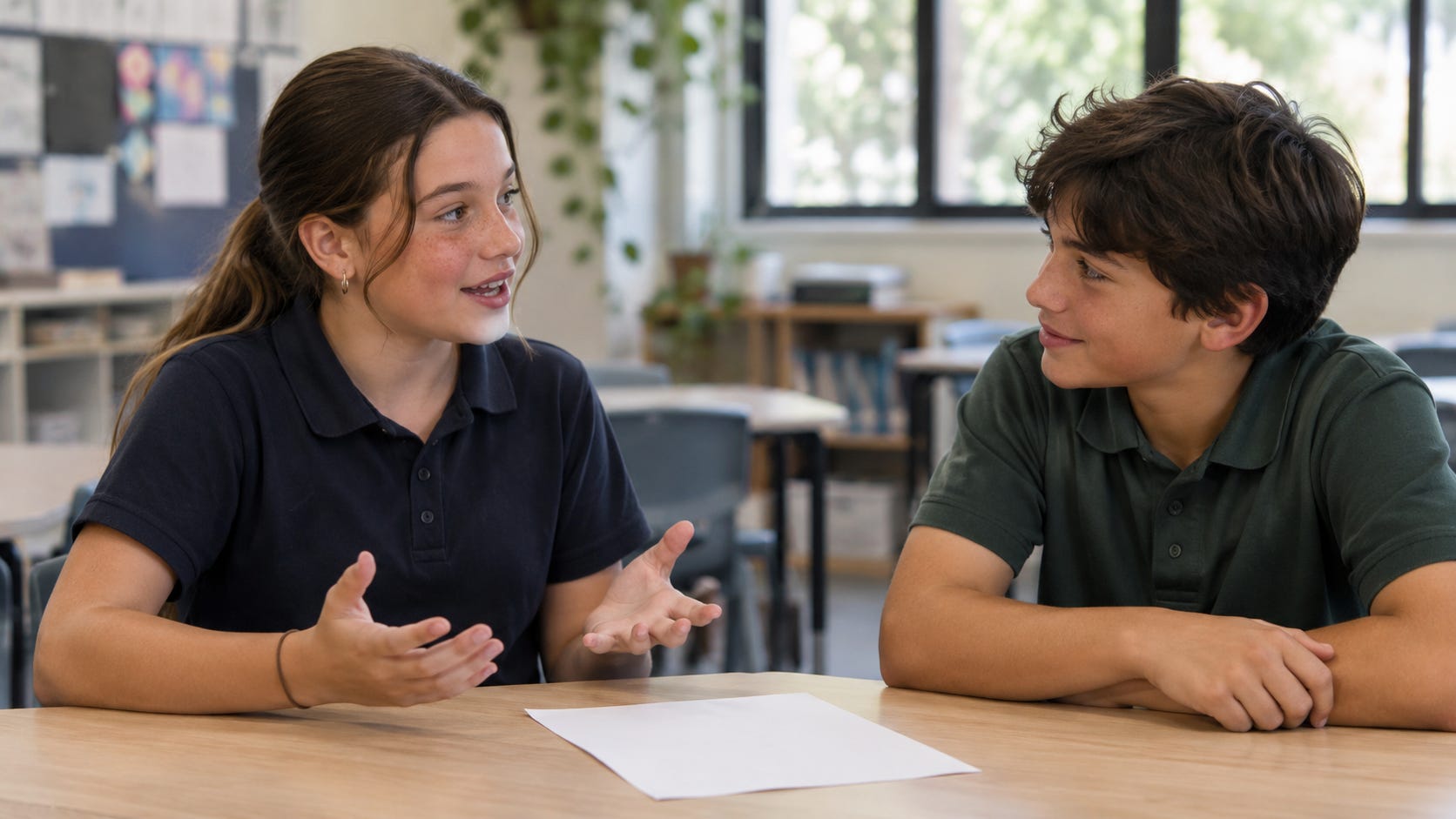
It’s a pairs activity, and you can do it in five minutes.
Ask students to choose one part of their speech. It might be why they want the job, or one thing they’d like to do for the school. Let them glance at what they’ve written, then turn the page over and tell that part to a partner.
Then comes the trick.
“Tell them again. Keep the idea, but change the words.”
Same idea, different words
Imagine a Year 5 student has written, “If elected, I would try to make our playground more inclusive.”
The first time around, they might stick pretty close to what’s on the page. Give them another go and you might hear, “You know how some kids wander around at lunch because they’ve got nobody to play with? I’d like to start a game near the courts that anyone can join.”
Now their partner has something to picture.
They might even ask, “What sort of game?”
Give the speaker a chance to answer. The words they reach for in that little exchange are often the ones worth putting in the election speech.
That’s what I like about this exercise. A child who’s practised saying the same thing two ways has already had a go at what they’ll need to do if a sentence slips their mind on election day. They can pause, think about what they meant and say it another way.
Give them something to glance at
After the pair rehearsal, ask students to jot down a few words that will bring the idea back. For our Year 6 candidate, a lunchtime game anyone can join might be enough. Then have them try that part once more with the cue in front of them.
Some kids will want their first line written out in full. Fair enough. Getting started in front of a room can be the hardest bit.
Once they’ve got that line out, they’ve got an idea they’ve already explained to someone in their own words.
It’s the idea, not the exact words, that hits home in a speech.
The next time you set aside class time for election speeches, try this with just one part of the speech.
As you walk around the room, listen for the sentence a child says on their second go that makes their partner look up.
Ask the speaker to jot down a cue that will bring that idea back.
That’s the bit I’d want them to take into election day.
Building student leadership at your school?
You’ll find practical, ready-to-use resources to help upper primary students speak up, take responsibility, and lead in the Young Leaders Program Resource Store.
Know a teacher who’s preparing prospective leaders to give their election speeches?
Share this post so they can help their students confidently give their election speeches.